
The gap since the May 2026 core update is now the longest stretch without a major algorithm adjustment this year. In the SEO industry, extended quiet periods often lead to rampant algorithmic speculation. However, with the holiday shopping season arriving, reacting to hypothetical Google algorithm updates in November 2026 is a dangerous distraction.
The strategy for Q4 is stability. SEO teams should freeze major site architecture changes during peak season and focus entirely on capturing immediate conversions. For e-commerce brands, this means leaning into Universal Cart integrations. For local and omnichannel brands, it requires maximizing local visibility and capturing foot traffic.
E-Commerce Integration: Universal Cart Readiness
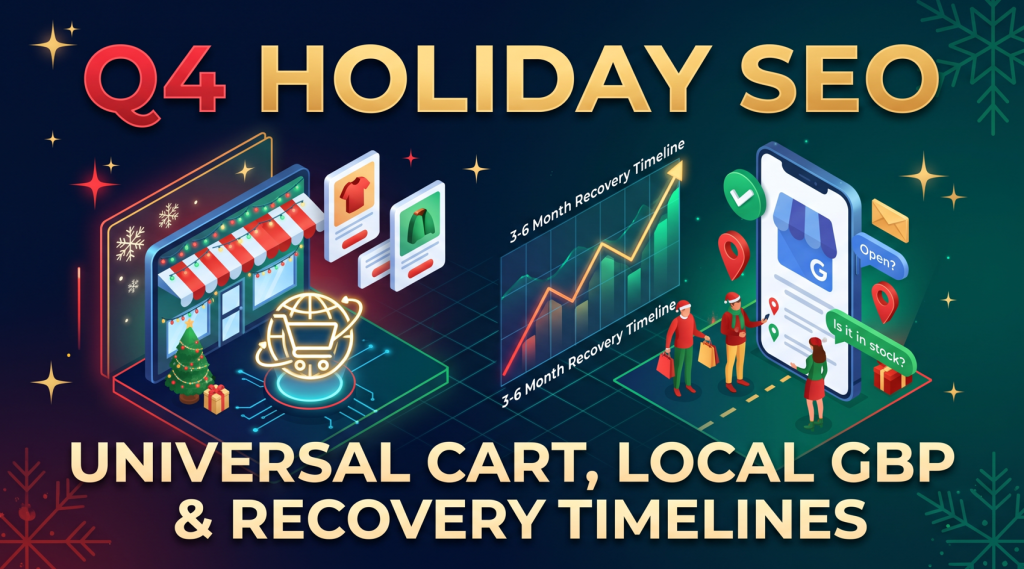
The rollout of Google’s Universal Commerce Protocol (UCP) is perfectly timed for the holiday launch, fundamentally shifting how AI agents interact with online stores. We are moving beyond optimizing for clicks to optimizing for agentic transactions. Since UCP allows AI to verify inventory, build carts, and complete tokenized transactions automatically, ensuring your infrastructure speaks the protocol’s language is the cornerstone of Universal Cart SEO November 2026.
To achieve Q4 holiday SEO readiness, technical teams must audit their UCP integration immediately. Agentic search relies on structured data instead of on-
page UX.
page UX.
- Audit and Implement Full Schema.org Markup: Ensure every product page has complete @type: Product, Offer, AggregateRating, and Review attributes.
- Enable native_commerce Attributes: Add the native_commerce attribute to your product feed to opt into UCP-powered checkouts.
- Add Conversational Attributes: Include structured data for returnPolicy, shippingDetails, real-time inventory availability, and product compatibility to answer AI agent queries directly.
- Verify API Accessibility: Confirm that your robots.txt is not inadvertently blocking AI shopping agents from crawling your transactional endpoints.
Merchant Center hygiene is equally critical. AI search requires complete consistency between your website’s structured data and your product feed. Any discrepancy between your Product schema and Google Merchant Center data can trigger validation issues, making your inventory ineligible for AI-powered checkout.
Local SEO: The New GBP Feature Set
Google recently expanded its local ecosystem with a Google Business Profile messaging update and stricter verification requirements. For businesses with physical locations, capturing last-minute holiday foot traffic depends on securing and optimizing these new channels.
A comprehensive Q4 local audit should cover:
- Verification Status: Confirm all locations are fully verified. Google rolled out six primary verification methods for 2026, relying heavily on live video and recorded workspace footage. Ensure no new accounts or major address edits trigger an unexpected re-verification loop mid-December.
- Core Profile Accuracy: Validate primary and secondary categories, standard operating hours, and special holiday hours.
- Visual Merchandising: Upload high-quality, recent photos of the store interior, exterior signage, and holiday displays.
- Messaging Settings: Enable and configure the new messaging features. Set up automated welcome messages and clear expectations for response times.
Leveraging GBP messaging effectively acts as a direct line for high-intent shoppers. When a user asks about real-time stock availability or holiday hours via chat, a rapid, accurate response often secures a sale that would have otherwise gone to a competitor.
Setting Client Expectations: Google’s Recovery Timelines
For clients still recovering from earlier volatility, managing executive expectations is a critical part of Q4 strategy. Instead of relying on guesswork, anchor your reporting to official Google recovery timelines SEO documentation.
Google’s newly shared timelines break down exactly how long processing and recovery take:
- Crawling and Indexing: Once processing begins, indexing takes approximately 1.5 hours end-to-end.
- Spam Update Recovery: Changes required to satisfy spam update policies typically take 1 to 2 weeks to be reflected after the violations are fully resolved.
- Core Update Recovery: Recovering from a core update typically takes 3 to 6 months. In severe cases, a site may have to wait up to a year for the next core update to see full recovery of reassessed content.
Use these official timelines to calm stakeholders. When organic traffic is down, executives often push to hastily delete pages or overhaul site architecture. Explaining that core update recovery takes months prevents panic-driven changes that could further damage Q4 performance.
Pro Tip: When tracking performance this month, track AI visibility separately from conventional organic performance. Rank tracking needs context about what appears around a ranking, not just the position number. Since AI Overviews now appear on most searches, combining these metrics will muddy your holiday attribution data.
Winning Q4 is about maintaining stability, gathering accurate data, and capitalizing on the latest UI features that drive direct sales. Track your AI and standard search metrics in isolated silos to understand true ROI. Implement a strict code freeze on major structural site changes, allowing your team to focus entirely on UCP integration and local messaging. Continue improving page quality and user experience, but do not waste holiday resources diagnosing ranking fluctuations based on algorithmic updates that have not happened.